
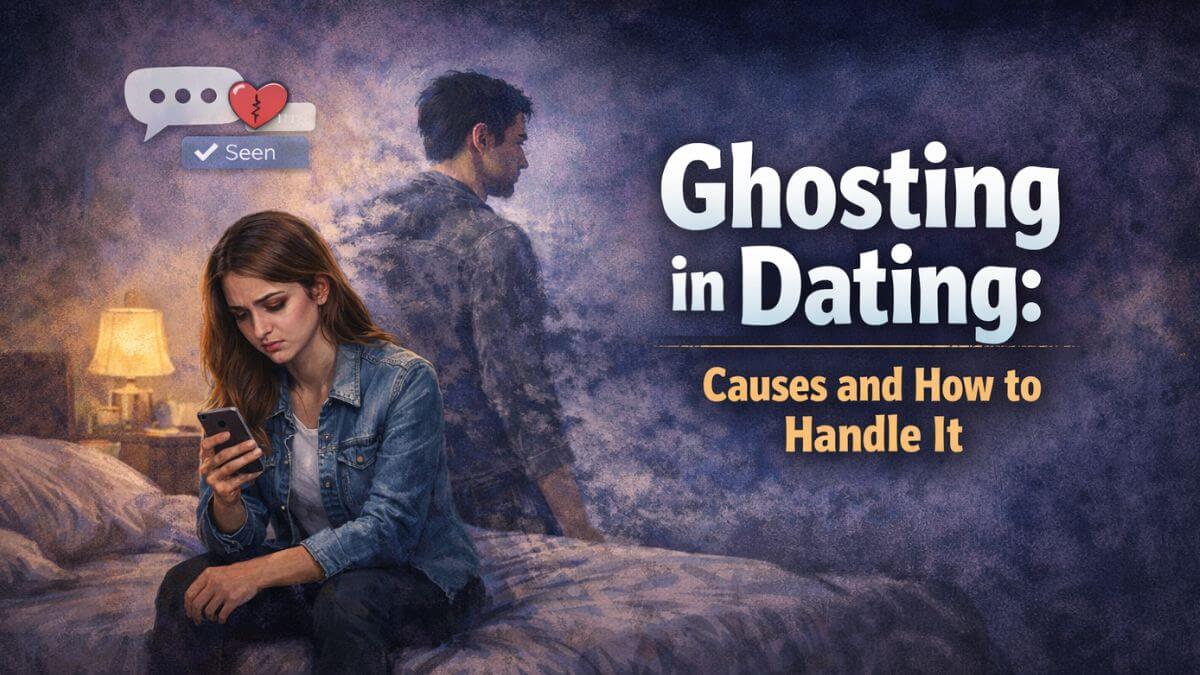
Dating today moves fast—messages fly, connections spark quickly, and intimacy can build in a matter of days. But just as quickly as someone can enter your life, they can vanish without explanation. No goodbye. No closure. Just silence. This modern disappearance act has a name: ghosting.
Ghosting has become one of the most painful and confusing experiences in modern dating. It leaves the person on the receiving end questioning everything—what went wrong, what they said, or whether they ever mattered at all. To understand how to deal with ghosting, it’s important to first understand why it happens.
This blog post explores the underlying causes of ghosting in dating and provides practical strategies for handling it to help you navigate dating with more resilience.
What Is Ghosting?
Ghosting happens when someone suddenly cuts off all communication and doesn’t explain why. They may stop responding to texts, calls, and might even unfollow and/or block you on social media, thereby “ghosting” you and seemingly ceasing to have ever existed in your life.
Where rejection at least allows processing and resolving how you felt about the situation, ghosting does not provide that closure or outcome. The relationship exists in limbo; it simply trails off in uncertainty. The absence of closure makes ghosting particularly damaging to the emotional psyche.
Why Ghosting Hurts So Much
Humans have a connection to meaning. It’s hard to understand when a conversation just stops. You are left to fill in the blanks yourself, often wondering about how you look, what you said, or how you are as a person.
The phenomenon of ghosting can also be said to be connected to more abstract fears, such as abandonment, rejection, and becoming invisible. The silence can be deafening, more painful than any insult or form of hurt. It is not just the individual; it is also the absence of clarity, dignity, and emotional security.
Common Causes of Ghosting in Dating
Ghosting is rarely about a single reason. It’s often a mix of emotional habits, fear, and modern dating culture.
1. Fear of Confrontation
There are many reasons why people ghost others, and that is mostly because they may not know how to break up honestly. When faced with the responsibility of breaking up honestly, nobody wants to tell another person that “I am no longer interested.” So, they ghost their partner instead.
2. Emotional Immaturity
Ghosting is often a sign of emotional unavailability. Some people enjoy connection but lack the maturity to handle accountability. When emotions deepen or expectations rise, they retreat rather than communicate.
3. Overwhelming Choices in Dating Apps
Dating apps create the illusion of endless options. When someone believes another match is always one swipe away, they may feel less responsible for treating people with care. Disappearing feels disposable in a culture that treats connections as replaceable.
4. Loss of Interest Without Malice
Not all ghosters are cruel. Sometimes attraction fades, or life gets busy, and instead of addressing it directly, the person lets the connection die quietly. The intention may not be to hurt—but the impact still does.
5. Emotional Overload or Personal Issues
Stress, mental health struggles, past trauma, or fear of intimacy can push someone to withdraw suddenly. Ghosting can be a defence mechanism when someone feels emotionally overwhelmed.
6. Power and Control
In some cases, ghosting is about control. Withholding communication can make the other person chase, question themselves, or feel small. This dynamic can be especially damaging and is a red flag for unhealthy behaviour.
Related Article: How to Stop Loving Someone Who Doesn’t Love You
How to Handle Being Ghosted
Ghosting can shake your confidence, but it doesn’t define your worth. How you respond matters—for your healing and your future relationships.
1. Stop Chasing Silence
One follow-up message is reasonable. Multiple messages begging for clarity only deepen the wound. If someone chooses silence, respect that choice—even if it hurts. Chasing someone who won’t respond gives them power over your emotions.
2. Don’t Internalise the Disappearance
Ghosting says more about the ghoster than the ghosted. It reflects their communication skills, emotional capacity, and coping style—not your value or desirability.
3. Create Your Own Closure
Waiting for an explanation that may never come keeps you emotionally stuck. Closure doesn’t always come from the other person. Sometimes it comes from accepting that someone who disappears without respect is not someone you want long-term.
4. Feel the Feelings—Then Release Them
Allow yourself to feel disappointed, angry, or sad. Suppressing emotions only prolongs them. But don’t let pain turn into self-blame. Feel it, understand it, and then let it pass.
5. Avoid Rewriting the Story
It’s tempting to romanticise the connection or imagine “what could have been.” Remember what actually happened. Someone who vanishes instead of communicating is showing you who they are.
6. Rebuild Your Confidence Intentionally
Ghosting can make you question your attractiveness or worth. Counter this by reconnecting with what makes you feel confident—your style, passions, body, social life, and ambitions. Confidence is not found in someone else’s replies.
Conclusion
Ghosting is a painful reality of modern dating, but it doesn’t have to break you. It can become a filter—removing emotionally unavailable people from your path and pushing you closer to connections rooted in respect and clarity.
Handling it requires self-compassion: process feelings, shift blame, and build resilience through activity and reflection. Ultimately, ghosting filters out incompatible partners, paving the way for genuine connections. Embrace this as growth—value those who communicate openly, and extend that courtesy yourself. In time, you’ll emerge stronger, ready for relationships built on respect and honesty.
